Knox's decalogue
Ronald Knox set out ten commandments for detective fiction in 1929, and the list is less a rulebook than an argument that the form is a contract with the reader.
Read the entry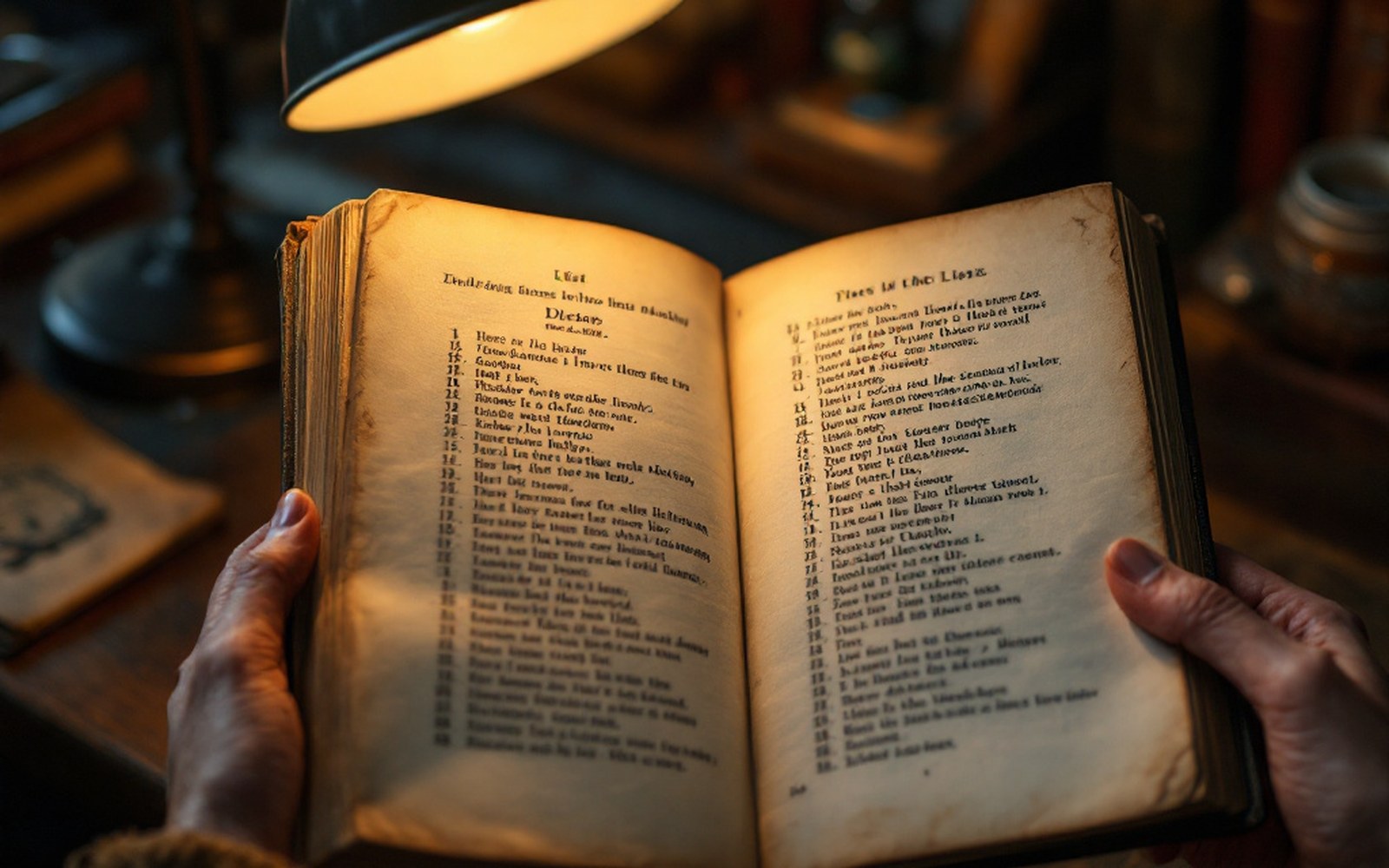
The register
Five of the twenty-three, one from each of the sections doing the most work.
Every clue appears before the solution, and is explained after it
Dorothy L. Sayers described the detective story as a contract with a reader entitled to compete. Clues run down the side, chapters across: a cross where a clue is shown, a block where it is explained. Anything with no cross to the left of the solution has been withheld — which is what most of Ronald Knox's ten rules exist to prevent.
The break, and what the shelf promised
Two entries that pull in opposite directions.

The Simple Art of Murder
Raymond Chandler's 1944 essay attacked the English puzzle for being an exercise about nothing, performed by people who had never seen a crime.

Green spines
A publisher's colour-coded livery told a buyer what kind of book it was before they read a word.
Kept in print by
Houses and studios that support the register.










Three mechanisms
The alibi as a document, the gummed page, the commissaire who waits.

Timetables and alibis
A whole subgenre runs on printed railway timetables, where the alibi is a document and breaking it is arithmetic.

Sealed final chapters
Some editions arrived with the last pages gummed shut, so a reader could prove to themselves they had not looked.

Maigret and method
Simenon's commissaire solves by sitting in the place until he understands the people, which is a method even if it refuses to look like one.
Raymond Chandler's objection was not that the rules were broken but that keeping them had become the whole ambition.
The Simple Art of Murder